
Laparoscopic Appendectomy (Appendix Removal)
Minimally invasive surgery to treat gallbladder problems such as gallstones and inflammation
focused on safety, clear planning, and smooth recovery.
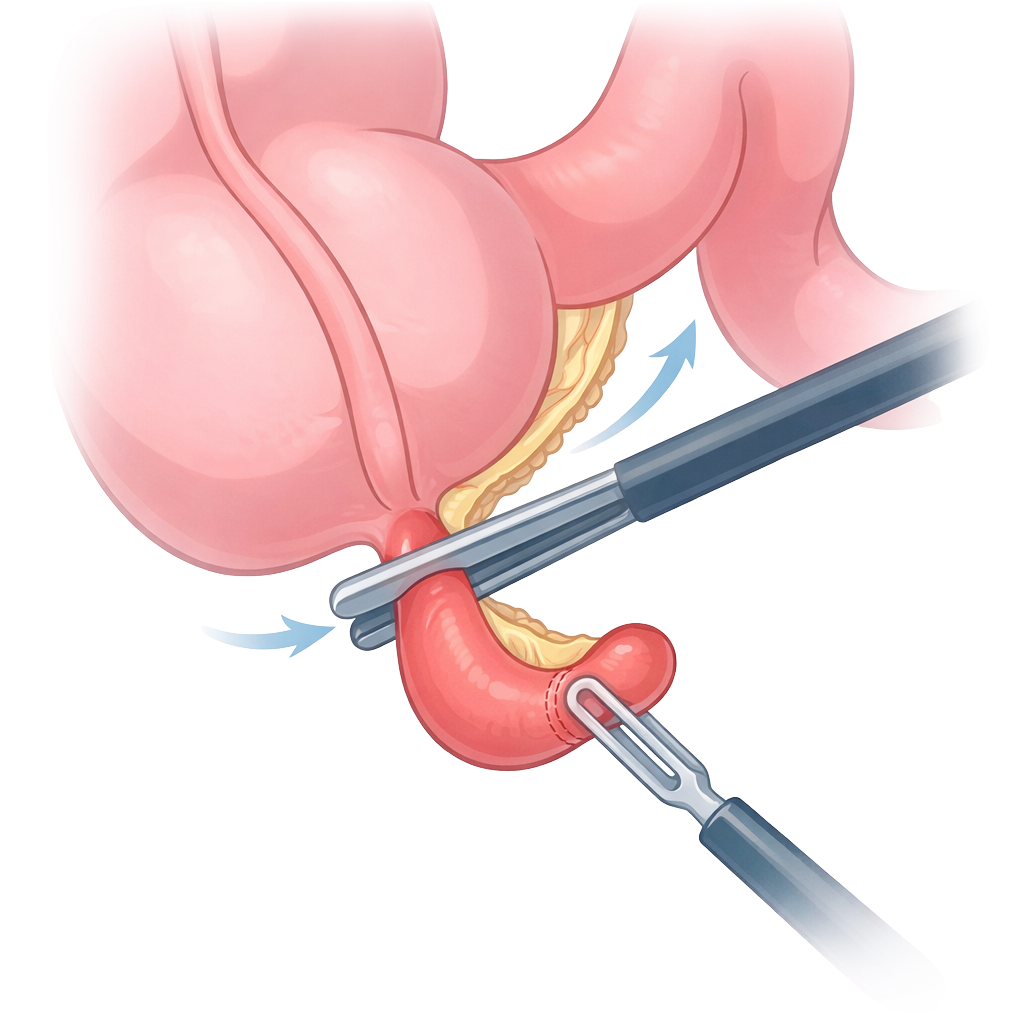
What is a Laparoscopic Appendectomy?
A laparoscopic appendectomy is a minimally invasive procedure to remove the appendix through small incisions using a camera and specialized instruments. It is commonly performed when appendicitis is suspected or confirmed.
Because appendicitis can worsen quickly, timely evaluation and treatment are important.
When is it needed?
Appendectomy is usually recommended when:
- Appendicitis is confirmed or strongly suspected
- Symptoms suggest risk of complications if delayed
- Imaging and clinical assessment support the diagnosis (case-dependent)
If appendicitis is suspected, urgent medical evaluation is recommended.
Common Symptoms of Appendicitis
Symptoms may include:
- Pain that often starts near the belly button and moves to the right lower abdomen
- Loss of appetite, nausea, vomiting
- Fever (sometimes)
- Pain that worsens with walking, coughing, or movement
- Abdominal tenderness
Seek urgent care if you have severe pain, persistent vomiting, or fever with worsening symptoms.
Benefits of the Laparoscopic Approach
- Small incisions and minimal scarring
- Faster recovery in many cases
- Less postoperative discomfort for many patients (case-dependent)
- Earlier return to daily activities (case-dependent)
Important Considerations (Safety & Risks)
All surgery has risks. Depending on the condition, considerations may include:
- Bleeding or infection
- Abscess or complications in advanced/complicated appendicitis (case-dependent)
- Injury to nearby structures (rare)
- Need to convert to open surgery (uncommon)
- Longer recovery if the appendix has perforated (case-dependent)
Your surgeon will explain what applies to your case and severity.
Preparation Before Surgery
In many cases, appendectomy is urgent. Preparation may include:
- Clinical assessment and blood tests
- Imaging such as ultrasound or CT when needed
- Anesthesia evaluation
- Fasting instructions (when possible)
- Clear post-op plan and discharge guidance
Recovery & Follow-Up (What to Expect)
- Hospital stay depends on severity (simple vs complicated cases)
- Early walking is encouraged as directed
- Gradual return to normal eating as tolerated
- Wound care instructions + follow-up visit(s)
- Return to work depends on job type and recovery progress
Why Choose Us?
With Dr. Ahmed Ali Abdelbary, you receive:
- Fast, accurate evaluation pathway
- Safety-first laparoscopic standards
- Clear recovery instructions and structured follow-up
- Personalized guidance based on appendicitis severity
FAQ ideas:
Appendicitis may become serious if delayed. If suspected, urgent evaluation is recommended to reduce complication risk.
Many patients go home the same day or after a short stay. Complicated cases may require longer observation.
Many patients resume eating gradually as tolerated. Your surgeon will guide diet progression based on your recovery.
Recovery varies. Simple cases often recover faster than complicated/perforated appendicitis cases.
Desk work may be possible earlier than physically demanding jobs. Exercise and heavy lifting are resumed gradually per your surgeon’s guidance.
Most people live normally without an appendix, with no long-term lifestyle limitations.
Book a Consultation
Get a clear diagnosis and the safest treatment plan for your condition.