Umbilical Hernia Repair (Laparoscopic) — Safe Hernia Treatment & Fast Recovery
Umbilical Hernia Repair is a common procedure to treat a bulge or weakness around the belly button (navel). When needed, surgery restores the abdominal wall strength—often using a mesh for long-term support. Many cases can be done laparoscopically (keyhole surgery) for smaller scars and quicker recovery.
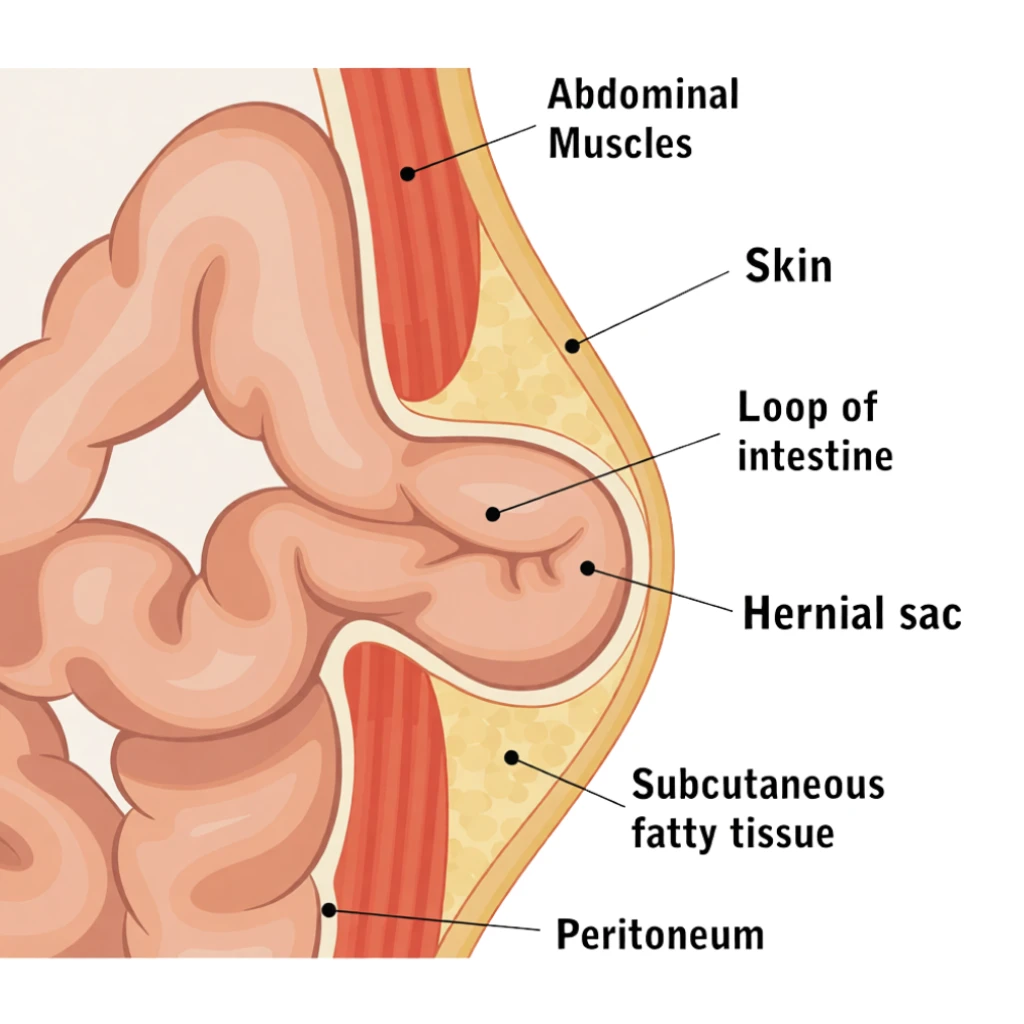
What is an Umbilical Hernia?
An umbilical hernia happens when tissue (often fat or a small part of intestine) pushes through a weak spot near the belly button, causing:
- A visible or noticeable bulge
- Discomfort or pain, especially with coughing, lifting, or standing
- Pressure or heaviness around the navel
When is Surgery Recommended?
Repair may be advised if:
- The hernia is getting larger
- You have pain or discomfort
- The bulge becomes difficult to push back in
- There are signs of complications (urgent evaluation), such as:
- Sudden severe pain
- Redness, warmth, or tenderness over the bulge
- Nausea/vomiting
- Bulge becomes hard and not reducible

How is Umbilical Hernia Repair Done?
1) Open Repair
- A small incision near the belly button
- The hernia is reduced and the defect is closed
- Mesh may be used depending on size and risk of recurrence
2) Laparoscopic Repair (Keyhole Surgery)
- Several small incisions
- Hernia repaired from inside, often with mesh
- Benefits can include less pain, quicker recovery, and smaller scars (case-dependent)
The best technique depends on hernia size, your health, prior surgeries, and surgeon assessment.
Benefits of Repair
- Relieves discomfort and prevents the hernia from worsening
- Reduces risk of incarceration/strangulation
- Improves abdominal wall strength and appearance of the bulge
Risks & Possible Complications
As with any surgery, risks may include:
- Bleeding, infection, fluid collection (seroma)
- Pain or recurrence (risk varies by hernia size and technique)
- Mesh-related issues (rare, but possible)
- Injury to nearby tissues (rare)
Preparation Before Surgery
Typically includes:
- Clinical evaluation + ultrasound/CT if needed
- Labs and anesthesia assessment
- Stop smoking if possible
- Manage chronic conditions (diabetes, blood pressure)
- Fasting instructions and medication review

Recovery & Aftercare
- Many patients go home the same day or within 24 hours
- Walking is encouraged early
- Avoid heavy lifting for a period set by your surgeon
- Return to desk work often within 1–2 weeks (varies)
- Full activity typically resumes gradually based on healing and hernia size

Why Choose Us?
With Dr. Ahmed Ali Abdelbary, your treatment is built around:
- Clear evaluation and procedure selection
- Patient-first safety approach
- Structured follow-up and guidance
- Modern bariatric and laparoscopic standards
FAQ ideas:
Not always. Small, symptom-free hernias may be observed, but surgery is recommended if symptoms worsen or risk increases.
Mesh may be recommended for larger hernias or when recurrence risk is higher. Your surgeon will decide based on your case.
Not always—prior surgeries, hernia size, and individual anatomy affect the choice.
Book a Consultation
If you want a professional assessment and guidance on the most suitable option for your condition, book your consultation today.