Incisional Hernia Repair (Laparoscopic) — Post-Surgery Hernia Treatment
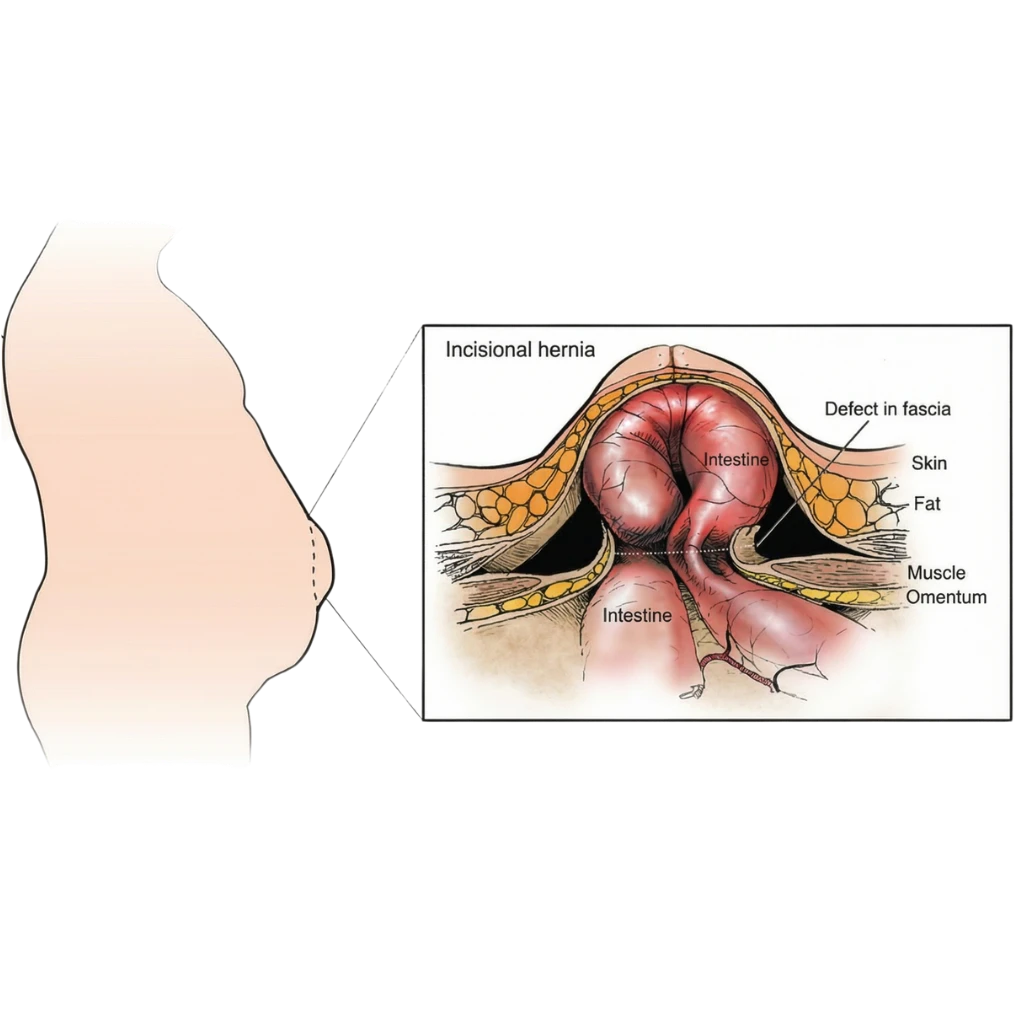
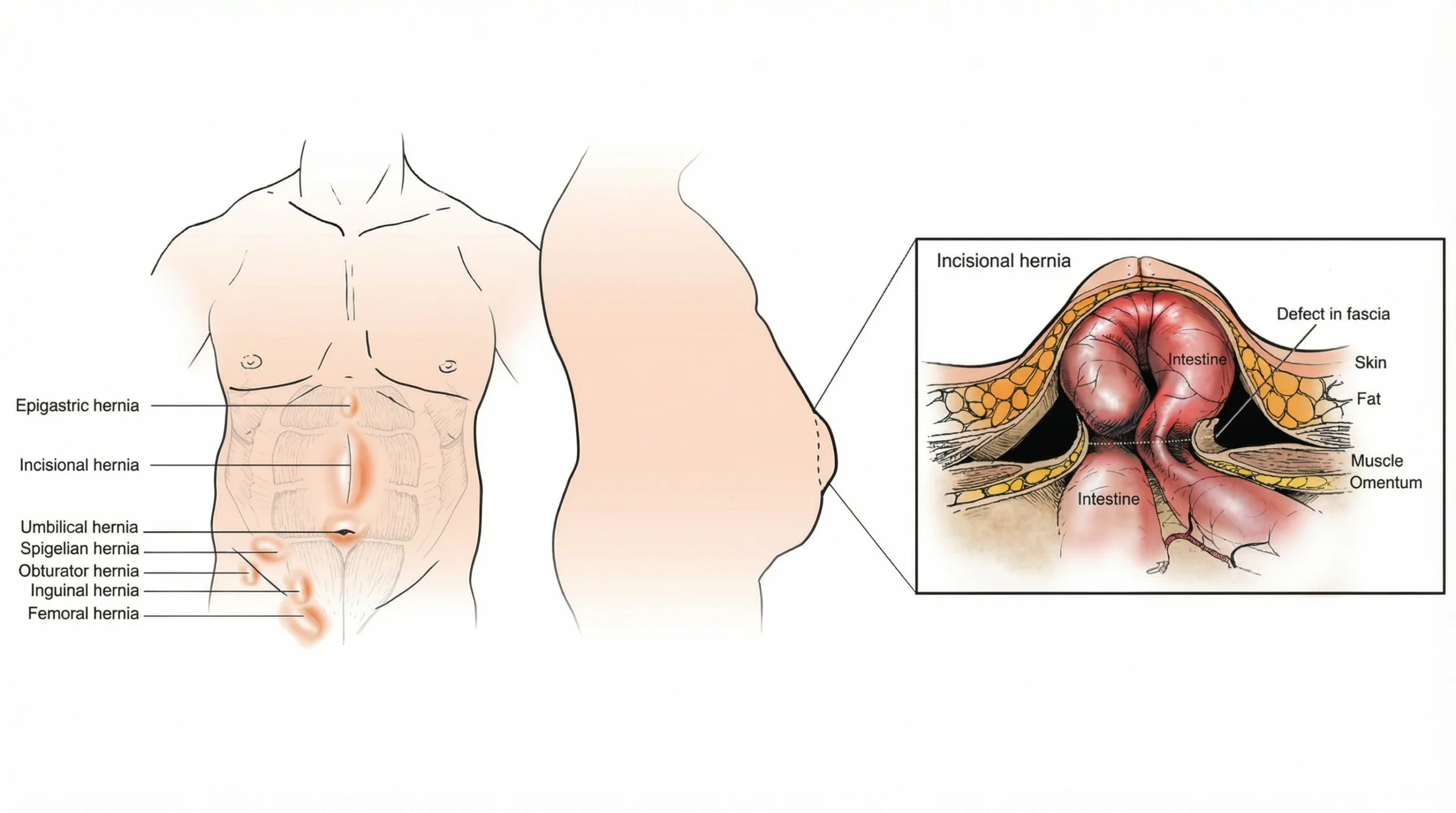
An Incisional Hernia happens when a weakness develops at the site of a previous surgical scar on the abdomen, allowing tissue (fat or intestine) to push through and form a bulge. Incisional hernia repair strengthens the abdominal wall—often using mesh—and can be done laparoscopically in many cases for smaller scars and faster recovery.
What is an Incisional Hernia?
It’s a hernia that occurs through an old surgical incision due to weakened abdominal muscles. You may notice:
- A bulge at or near a prior scar
- Pain or discomfort when standing, coughing, or lifting
- A feeling of pressure or heaviness in the abdomen
Incisional hernias can grow over time, especially with:
- Heavy lifting
- Weight gain
- Chronic cough/constipation (straining)
- Poor wound healing after the first surgery
When is Surgery Recommended?
Repair is typically recommended if:
- The hernia is increasing in size
- You have pain or limitation in daily activity
- The hernia is difficult to push back in
- You want to reduce the risk of complications
Seek urgent evaluation if you have:
- Sudden severe pain
- A hard bulge that won’t go back in
- Redness or warmth over the bulge
- Nausea/vomiting or abdominal bloating
These may suggest incarceration/strangulation.

How is Incisional Hernia Repair Done?
1) Open Repair
- Incision over or near the scar
- Hernia contents are returned to the abdomen
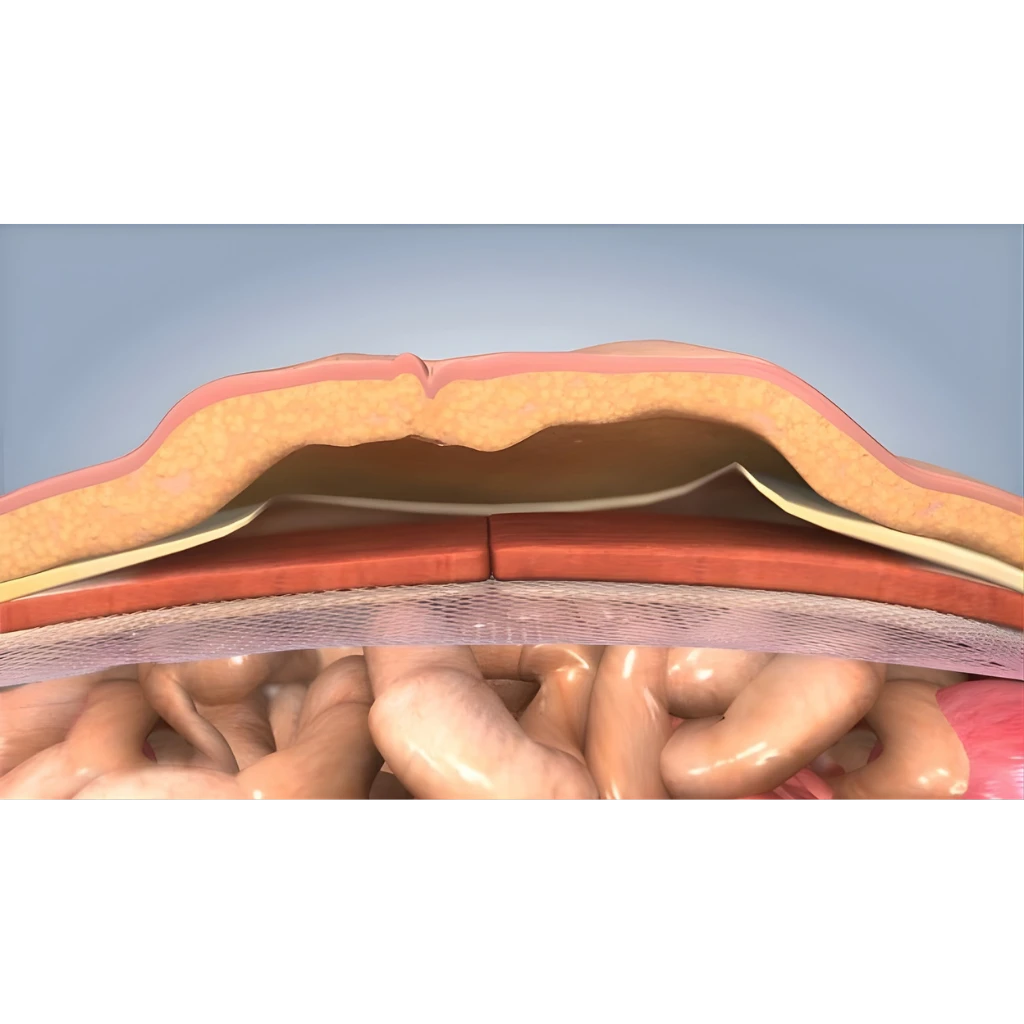
- Abdominal wall is repaired, often reinforced with mesh
2) Laparoscopic Repair (Keyhole Surgery)
Common approaches include:
- Several small incisions away from the scar
- Repair is done from inside, often with mesh
- Benefits may include:
- Less wound complications in some cases
- Faster recovery and smaller scars
- Better visualization of multiple defects (if present)
The best approach depends on hernia size, location, prior surgeries, scar tissue, and your overall health.The best approach depends on hernia size, location, prior surgeries, scar tissue, and your overall health.
Benefits of Repair
- Reduces pain and restores abdominal wall strength
- Prevents the hernia from enlarging
- Lowers risk of emergency complications
- Improves movement, comfort, and quality of life
Risks & Possible Complications
Possible risks include:
- Bleeding, infection, fluid collection (seroma)
- Recurrence (risk varies by size and patient factors)
- Mesh-related complications (rare)
- Injury to bowel or surrounding tissues (rare)
- Chronic discomfort (uncommon with modern techniques)
Pre-Op Preparation
Common steps:
- Physical exam + imaging (ultrasound/CT) if needed
- Labs and anesthesia evaluation
- Optimize health: control diabetes, stop smoking if possible
- Treat causes of straining (cough/constipation)
- Weight management advice when appropriate (helps reduce recurrence risk)

Recovery & Aftercare
- Hospital stay varies by hernia size and repair type
- Early walking is encouraged
- Avoid heavy lifting for the period your surgeon specifies
- Return to desk work often within 1–2 weeks (varies)
- Gradual return to full activity based on healing and hernia complexity

Why Choose Us?
With Dr. Ahmed Ali Abdelbary, your treatment is built around:
- Clear evaluation and procedure selection
- Patient-first safety approach
- Structured follow-up and guidance
- Modern bariatric and laparoscopic standards
FAQ ideas:
Mesh is commonly used in incisional hernia repairs to reinforce the abdominal wall and reduce recurrence risk, especially for larger defects.
No. It typically does not close on its own and may grow over time.
Not always. Very large hernias or complex scar tissue may require open or advanced abdominal wall reconstruction techniques.
Book a Consultation
If you want a professional assessment and guidance on the most suitable option for your condition, book your consultation today.