Stomach Tumor Resection — Surgical Removal of Gastric Tumors (Laparoscopic/Open)
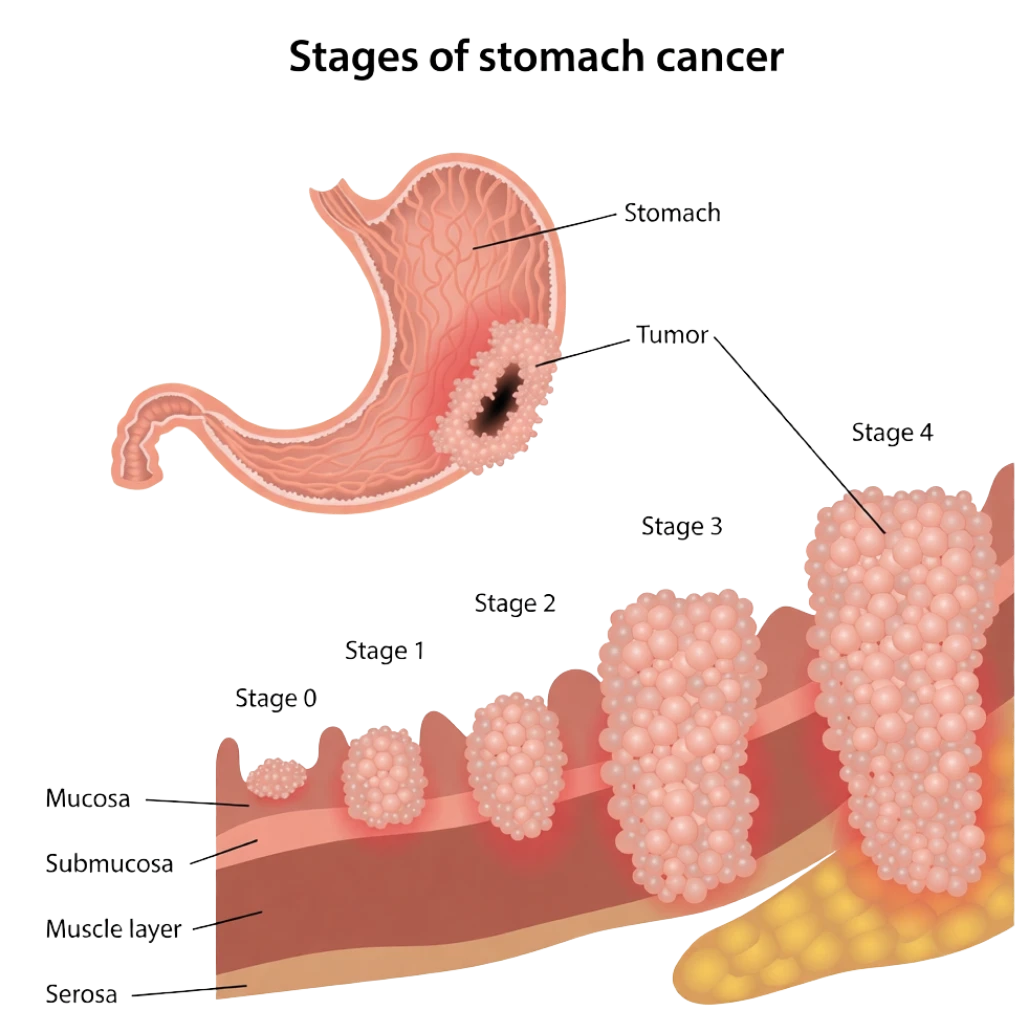
Stomach Tumor Resection is surgery to remove a tumor from the stomach with a safe margin of healthy tissue. Depending on the type, size, and location of the tumor, surgery may be done laparoscopically (minimally invasive) or via an open approach. In cancer cases, nearby lymph nodes are often removed for accurate staging.
What is Stomach Tumor Resection?
The goal is to remove the tumor completely and restore safe digestive function. The procedure may include:
- Removing part of the stomach (partial/subtotal gastrectomy)
- Removing the entire stomach (total gastrectomy) in selected cases
- Removing nearby lymph nodes when cancer is suspected/confirmed
- Reconstructing the digestive tract to allow food passage
The exact operation depends on the tumor location (upper/middle/lower stomach), staging, and pathology.
Types of Stomach Tumors
Surgery may be performed for:
- Gastric cancer (adenocarcinoma)
- GIST (gastrointestinal stromal tumor)
- Neuroendocrine tumors (in selected cases)
- Large benign tumors or polyps that can’t be removed endoscopically

When is Surgery Recommended?
Resection may be recommended if:
- Biopsy confirms a tumor requiring removal
- The tumor is large, growing, bleeding, or causing obstruction
- Endoscopic removal is not safe or not possible
- There are complications (bleeding, narrowing, blockage)
Symptoms That May Occur
Some patients have mild or no symptoms early. Possible symptoms include:
- Persistent upper abdominal pain or discomfort
- Early fullness (feeling full quickly)
- Nausea/vomiting
- Unexplained weight loss or poor appetite
- Black stools or anemia due to bleeding
Laparoscopic vs Open Surgery
Laparoscopic (Minimally Invasive)
- Small incisions with a camera and specialized instruments
- Often less pain and faster recovery (case-dependent)
Open Surgery
- One larger incision
- May be preferred for advanced tumors, complex cases, or when wider access is needed
The final approach is based on imaging, tumor size/location, and overall medical condition.
What Happens During Surgery?
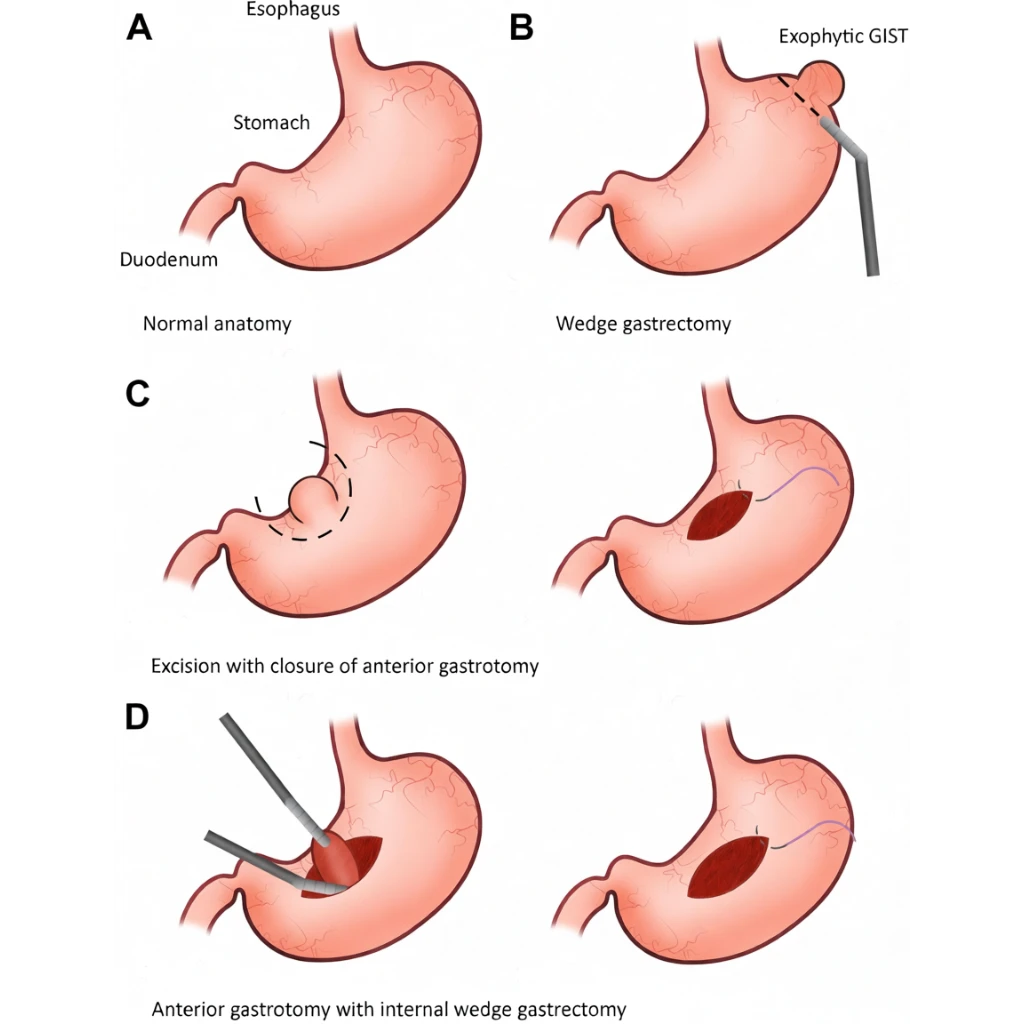
- The tumor is removed with safe margins
- Lymph nodes may be removed (especially in cancer cases)
- The stomach is reconstructed:
- After partial removal, the remaining stomach is connected to the intestine
- After total removal, the esophagus is connected to the small intestine
In selected cases, additional treatment may be needed before or after surgery (based on staging and pathology).
Risks & Possible Complications
Possible risks include:
- Bleeding, infection
- Leakage at the connection (anastomotic leak)
- Narrowing at the connection (stricture)
- Nutritional deficiencies, weight loss, dumping symptoms (depending on surgery extent)
- Blood clots (rare)
Your surgeon will explain risks based on your specific operation and health status.
Pre-Operative Evaluation (Typical Workup)
Your surgeon may request:
- Upper endoscopy (gastroscopy) + biopsy
- CT scan of chest/abdomen/pelvis (and/or endoscopic ultrasound in some cases)
- Blood tests (CBC, liver/kidney profile) and nutritional assessment
- Tumor markers or specialized tests depending on tumor type
- Anesthesia and medical fitness evaluation

Recovery & Aftercare
Recovery usually includes:
- Early mobilization and breathing exercises
- Gradual return to eating with diet guidance
- Pain control and wound care
- Hospital stay varies based on procedure type and approach
- Long-term follow-up for nutrition (especially after larger resections)

Why Choose Us?
With Dr. Ahmed Ali Abdelbary, your treatment is built around:
- Clear evaluation and procedure selection
- Patient-first safety approach
- Structured follow-up and guidance
- Modern bariatric and laparoscopic standards
FAQ ideas:
No. Some resections are for tumors like GIST or large benign growths not suitable for endoscopic removal.
Only in certain cancer stages—this depends on the final pathology and staging.
Yes, especially after larger resections. Most patients need smaller, more frequent meals and nutrition follow-up.
Book a Consultation
If you want a professional assessment and guidance on the most suitable option for your condition, book your consultation today.