
Anal Fistula — Symptoms, Diagnosis & Treatment Options (Including Surgery)
An Anal Fistula is an abnormal tunnel that forms between the inside of the anal canal and the skin near the anus—often after an infection or abscess. It typically does not heal on its own and usually requires a surgical plan to cure the fistula while protecting continence.
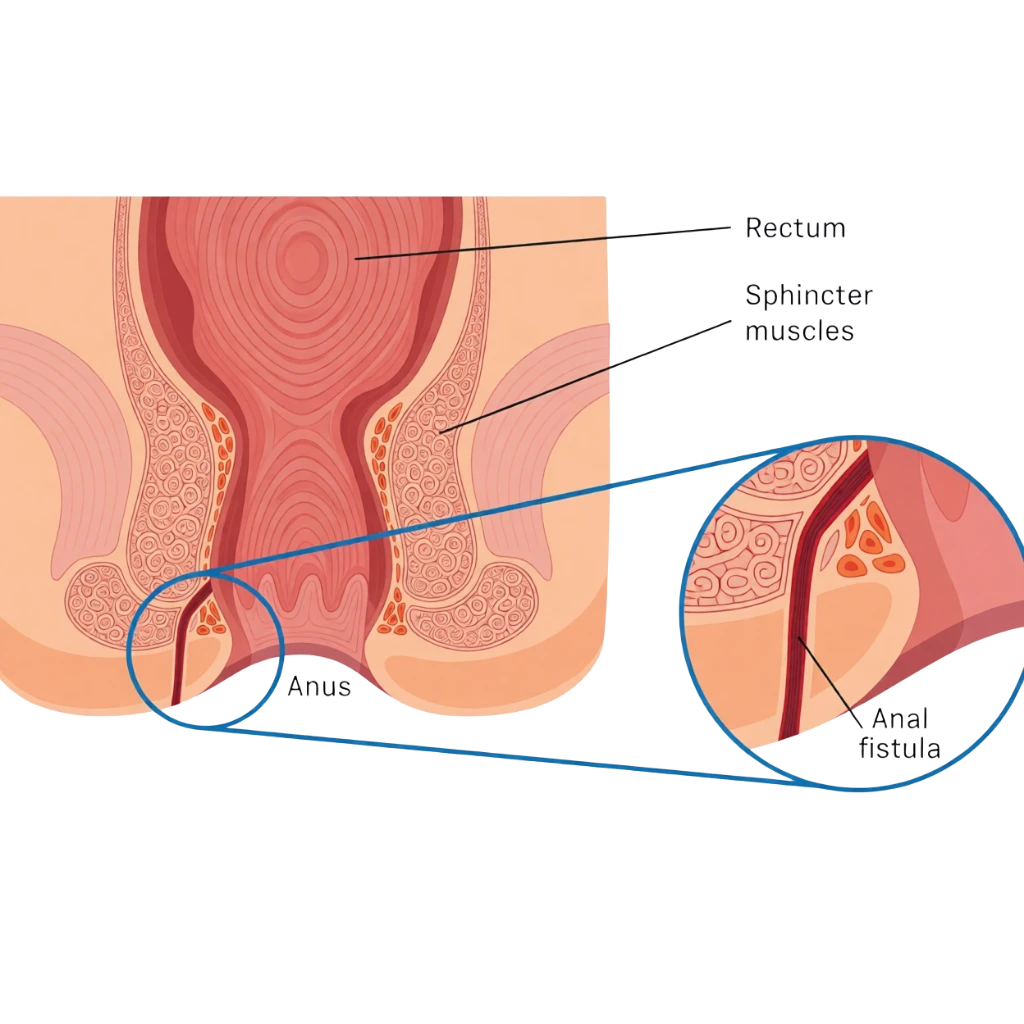
What is an Anal Fistula?
A fistula is a small tract that develops after an anal gland infection causes an abscess. Even after the abscess drains, a persistent tunnel may remain, leading to ongoing symptoms.
Common Symptoms
- Recurrent swelling or pain near the anus
- Pus or fluid discharge (sometimes with foul smell)
- Irritation or itching around the anus
- A small opening on the skin that keeps draining
- Occasional bleeding
- Fever if a new abscess forms
Why Does It Happen?
Most anal fistulas are caused by:
- A previous anal abscess
Other causes (less common) include:
- Crohn’s disease
- Tuberculosis or other infections (rare)
- Trauma or prior surgery
- Radiation (rare)

Diagnosis (How It’s Confirmed)
Diagnosis is based on:
- Clinical examination by a specialist
- Sometimes imaging to map the tract:
- MRI pelvis (very helpful for complex fistulas)
- Endoanal ultrasound (in selected cases)
Mapping the fistula is important to choose the safest treatment and reduce recurrence.
Treatment Options
The goal is to eliminate the fistula while preserving sphincter function.
1) Drainage of Abscess (If Present)
If an abscess is active, it must be drained first (urgent).
2) Seton Placement
A seton (soft thread) may be placed to:
- Keep the tract draining
- Reduce infection
- Prepare for definitive surgery (especially in complex fistulas)
3) Definitive Surgical Options (Case-Dependent)
- Fistulotomy (opening the tract): effective for low/simple fistulas
- LIFT procedure: useful for certain fistulas involving sphincter muscles
- Advancement flap: for selected complex cases
- Fibrin glue / plugs: selected cases (variable success)
The right option depends on whether the fissure is acute or chronic, and your symptoms.
When to Seek Urgent Care
Get urgent evaluation if you have:
- Fever with worsening pain/swelling (possible abscess)
- Increasing redness or severe tenderness
- Inability to sit or severe discomfort
Recovery & Aftercare
- Pain is usually manageable with medications
- Sitz baths, hygiene, and wound care are important
- Follow-up visits ensure healing and reduce recurrence risk
- Return to work varies by procedure and activity level
Why Choose Us?
With Dr. Ahmed Ali Abdelbary, your treatment is built around:
- Clear evaluation and procedure selection
- Patient-first safety approach
- Structured follow-up and guidance
- Modern bariatric and laparoscopic standards
FAQ ideas:
Usually no. It typically persists and can cause recurring abscesses if not treated.
Most cases require a surgical approach, but the technique is individualized for safety.
Modern planning focuses on protecting sphincter muscles. Choosing the correct procedure is key.
Recurrence is possible, especially with complex tracts—imaging and proper technique reduce risk.
Book a Consultation
If you want a professional assessment and guidance on the most suitable option for your condition, book your consultation today.