
Anal Fissure — Causes, Symptoms & Best Treatment Options
An Anal Fissure is a small tear in the lining of the anal canal. It commonly causes sharp pain during/after bowel movements and sometimes bright red bleeding. Most fissures heal with proper medical treatment and lifestyle changes, but chronic cases may need procedures or surgery.
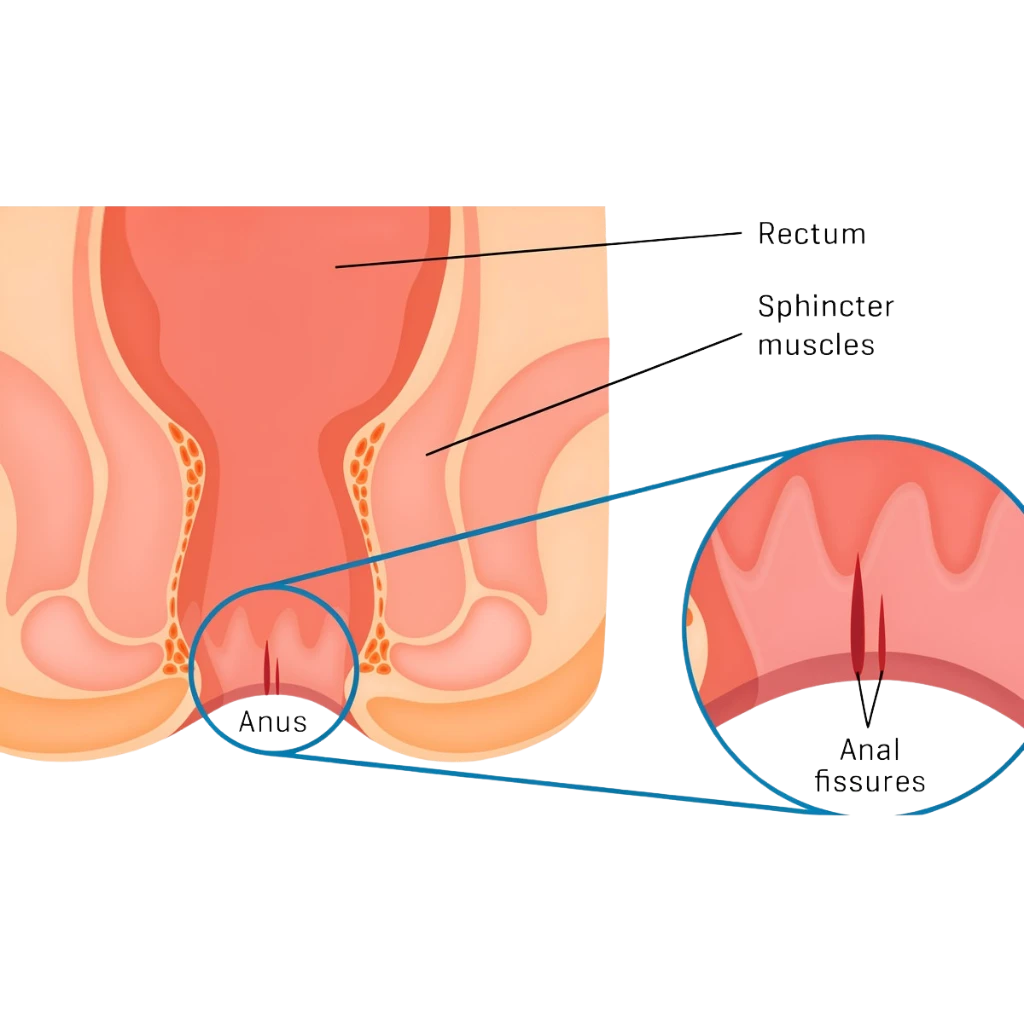
What is an Anal Fissure?
An anal fissure is a tear caused by stretching or injury to the anal lining—often due to passing hard stool. It can be:
- Acute fissure (recent, usually heals with conservative care)
- Chronic fissure (lasts longer, may develop a skin tag and persistent spasm)
Common Symptoms
- Severe, sharp pain during bowel movements (may last minutes to hours)
- Bright red blood on toilet paper or stool
- Burning or itching around the anus
- Visible crack/tear or a small skin tag (in chronic fissures)
- Spasm/tightness of the anal sphincter
Why Does It Happen?
Common triggers include:
- Constipation and hard stools
- Straining during bowel movements
- Recurrent diarrhea
- Low-fiber diet and dehydration
- Post-childbirth (in some cases)
Less commonly, fissures may be associated with conditions like inflammatory bowel disease—your doctor will assess if needed.

Treatment Options
1) Conservative Treatment (First Line)
Most fissures improve with:
- Increase fiber + hydration
- Stool softeners if needed
- Warm sitz baths (10–15 minutes, several times/day)
- Pain-relief creams (short-term) as prescribed
2) Medical Therapy for Healing
To reduce sphincter spasm and improve blood flow:
- Topical vasodilator ointments (e.g., nitrate-based or calcium-channel blocker creams)
- These help many patients heal without surgery
3) Procedures / Surgery (For Chronic or Recurrent Fissures)
If symptoms persist:
- Botox injection (relaxes the sphincter temporarily)
- Lateral Internal Sphincterotomy (LIS) — highly effective for chronic fissures (selected cases), performed by an experienced surgeon
The right option depends on whether the fissure is acute or chronic, and your symptoms.
When to See a Doctor Urgently
Get evaluated if you have:
- Persistent bleeding
- Severe pain not improving with treatment
- Fever, swelling, pus, or worsening symptoms
- Recurrent fissures (to rule out other conditions)
Prevention Tips
- Keep stools soft: fiber + water daily
- Avoid straining and long toilet sitting
- Treat constipation early
- Maintain regular activity/walking
Why Choose Us?
With Dr. Ahmed Ali Abdelbary, your treatment is built around:
- Clear evaluation and procedure selection
- Patient-first safety approach
- Structured follow-up and guidance
- Modern bariatric and laparoscopic standards
FAQ ideas:
No. Fissures are tears that cause sharp pain; hemorrhoids are swollen veins and often cause bleeding/itching.
Acute fissures may heal within a few weeks with proper care. Chronic fissures may need advanced treatment.
It can, especially if constipation returns—prevention is essential.
Book a Consultation
If you want a professional assessment and guidance on the most suitable option for your condition, book your consultation today.