
Hernia Repair Surgery
A safe, effective procedure to restore the abdominal wall, reduce discomfort, and help prevent recurrence – using the most suitable technique for your condition.
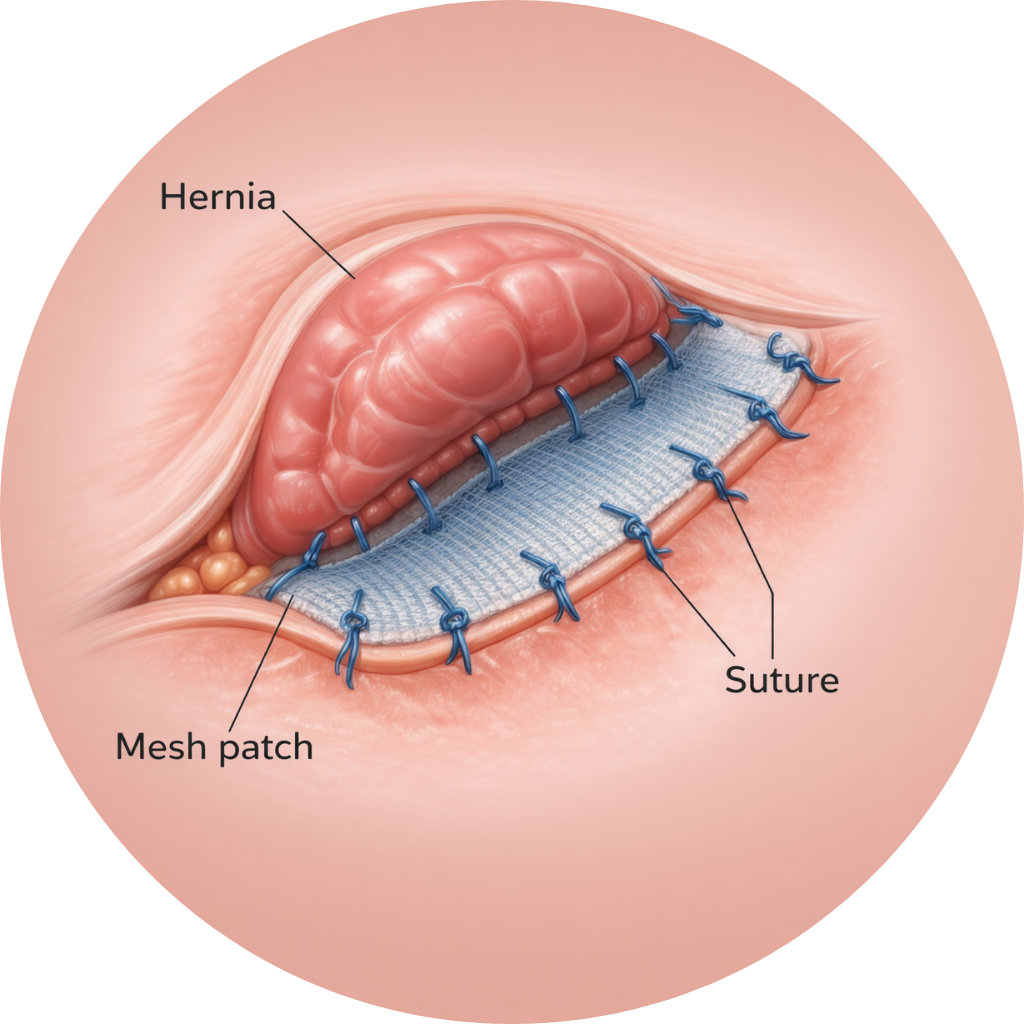
What is a Hernia?
A hernia occurs when an internal tissue or organ pushes through a weak area in the abdominal wall. It may cause a visible bulge, discomfort, or pain – especially with lifting, coughing, or activity.
Hernia repair surgery strengthens the weak area and returns tissue to its proper position. The approach (laparoscopic or open) is selected based on the hernia type and your health status.
Common Symptoms
You may notice:
- A bulge in the groin or abdominal area
- Pain or discomfort when lifting or standing for long periods
- A feeling of heaviness, pressure, or burning sensation
- Symptoms that worsen with coughing or straining
Urgent care is needed if there is severe pain, redness, vomiting, or the bulge becomes hard and cannot be pushed back.
Types of Hernias We Treat (Examples)
- Inguinal (groin) hernia
- Umbilical (navel) hernia
- Incisional hernia (after previous surgery)
- Other abdominal wall hernias (case-dependent)
Treatment Options
1) Laparoscopic Hernia Repair
A minimally invasive approach using small incisions and a camera. It may be suitable for many patients depending on the hernia type and history.
2) Open Hernia Repair
A traditional approach that may be recommended for certain hernias or complex cases.
Mesh Use
Mesh may be recommended in many repairs to strengthen the area and reduce recurrence risk. The decision is individualized.
Key Benefits
- Reduces risk of hernia complications over time
- Restores abdominal wall strength
- Modern techniques may support faster recovery (case-dependent)
Important Considerations (Safety & Risks)
All surgery has potential risks. Depending on the case, considerations can include:
- Bleeding or infection
- Recurrence (risk varies by hernia type and technique)
- Seroma (fluid collection)
- Chronic pain or nerve irritation (uncommon)
- Mesh-related issues (rare, case-dependent)
Your surgeon will explain what applies to your specific situation.
Preparation Before Surgery
Preparation is personalized, but commonly includes:
- Clinical evaluation and hernia assessment
- Labs and imaging when needed
- Medication review (especially blood thinners)
- Guidance on fasting and surgery-day instructions
- Clear recovery plan and activity restrictions
Recovery & Follow-Up (What to Expect)
Preparation is personalized, but commonly includes:
- Same-day discharge is possible in many cases (case-dependent)
- Early walking is encouraged as directed
- Gradual return to daily activities with clear lifting restrictions
- Follow-up visits to ensure healing and reduce recurrence risk
Your return-to-work timeline depends on your job demands and the type of repair performed.
Why Choose Us?
With Dr. Ahmed Ali Abdelbary, you receive:
- Case-by-case technique selection (laparoscopic vs open)
- Safety-first approach and clear expectations
- Structured follow-up and recovery guidance
- Modern laparoscopic surgery standards when appropriate
FAQ ideas:
Not always. Some hernias can be monitored, but many require repair to prevent worsening or complications. A consultation determines the best plan.
Not for everyone. The best approach depends on hernia type, size, prior surgeries, and your overall health.
Mesh is commonly used to strengthen the repair and reduce recurrence risk, but the decision is individualized.
Recovery varies. Many patients resume light activities relatively soon, but lifting restrictions may apply for a period of time.
This depends on your job. Desk work may be possible earlier than physically demanding work.
Recurrence is possible, but careful technique, proper recovery, and following activity guidance can reduce the risk.
Book a Consultation
If you want a professional assessment and guidance on the most suitable option for your condition, book your consultation today.